

Amy and Michelle met at the Royal Academy of Art and quickly realised that their shared curiosity about materials and process was the start of something bigger. Rather than isolating themselves in private studios, they imagined a space where making could be shared, a ‘house’ for ceramics, exploration, and conversation.
Het Keramisch Huis is more than a studio; it’s a home for creativity. Here, workshops and private events bring people together to experiment, make mistakes, and discover the tactile joy of clay. Working in a nearly century-old building, they embrace the building’s imperfections as a reflection of the material itself: raw, delicate, and endlessly mutable.
In this conversation, Amy and Michelle talk about the evolution of their collaboration, the quiet lessons learned from working with clay, and how the act of making shapes the way they live and see the objects around them.
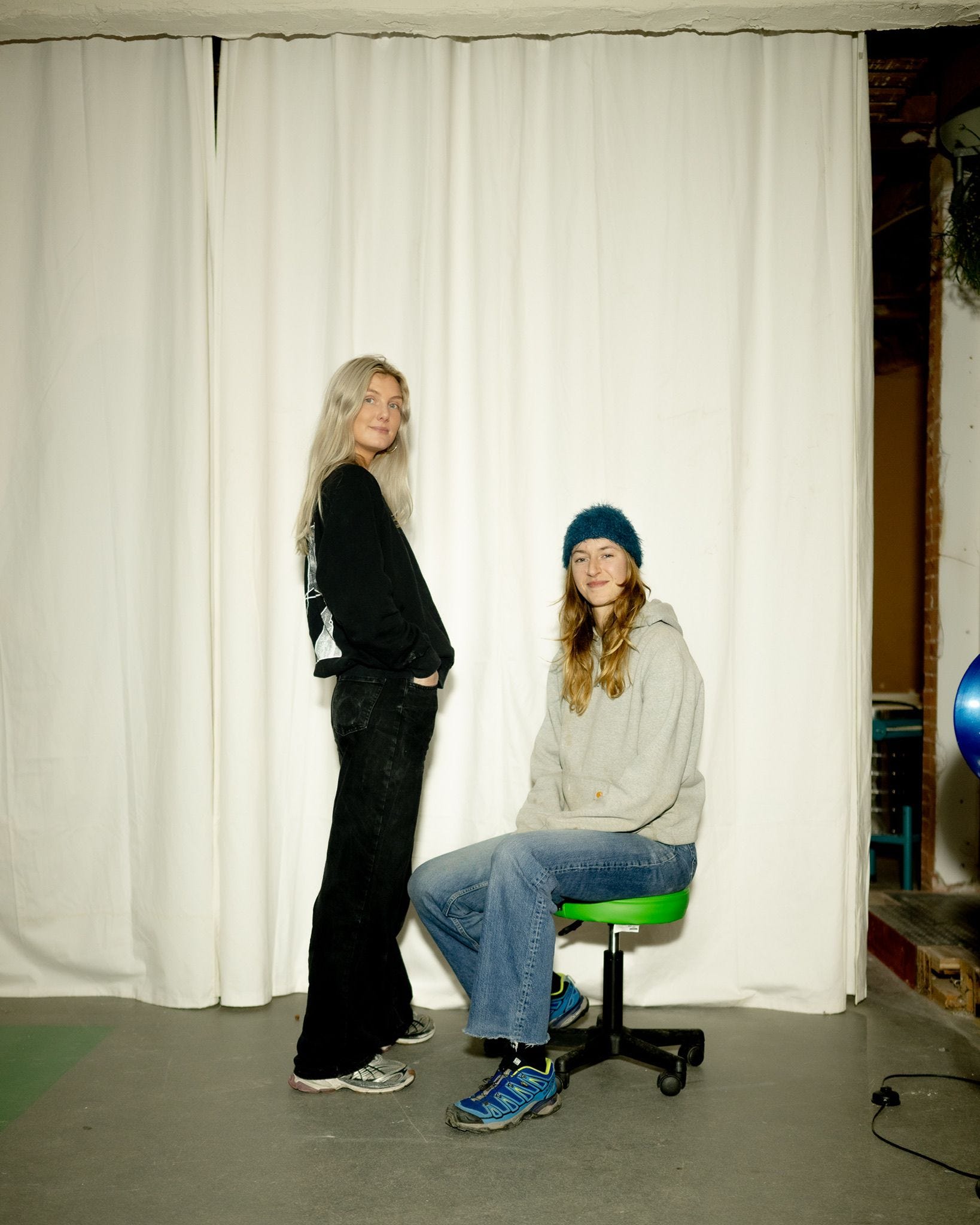
You two met at the Royal Academy of Art and spent years side-by-side in the ceramics classroom. What was it about your friendship that made you realize you didn’t just want to be colleagues, but co-founders of a ‘house’?
We don’t believe there was a specific moment or thing that made us realize we wanted to build a ‘house’ together. Our collaboration grew very naturally. Though, I do remember this sunny evening on the beach at the end of the summer after our graduation. I remember I turned to Amy for advice about what to do next in life. We both wanted to continue working with ceramics, but didn’t want to isolate ourselves in a studio. I personally wasn’t ready to exhibit and sell my ceramics, but simply wanted to continue to create and explore. This is when I facetiously mentioned to Amy if we shouldn’t start hosting ceramics workshops; This way we could both continue to play with the material, without having to sell our work but rather share our knowledge and continue to learn from the people we would meet and teach. Then it was Amy’s reaction — with her sheer enthousiasme and faith in the idea, that confirmed this was the next step we were both subconsciously longing for. It was from this moment on that we knew we needed to do this together.
Naming the studio a ‘Huis’ (House) implies a level of intimacy and belonging. Why was it important to you to create a space that felt like a home for makers rather than just a commercial production studio?
As mentioned before, this concept didn’t grow from a business point of view, but from a personal need to share our passion and not isolate ourselves in a private studio.
The core idea was to create a workshop space that was very accessible. This meant looking for ways to keep the costs as low as possible and creating a space that felt approachable and safe. Nothing too slick or clean but rather an honest place where you can make mistakes and simply enjoy being at with family, friends or strangers.
This core idea drove a lot of our choices along the way — e.g. the idea of doing hand building classes instead of clay turning classes. Or the fact that you can book a single workshop or host a private event like a birthday, babyshower or family reunion.
Everything was in function of communicating accessibility and a sense of being.
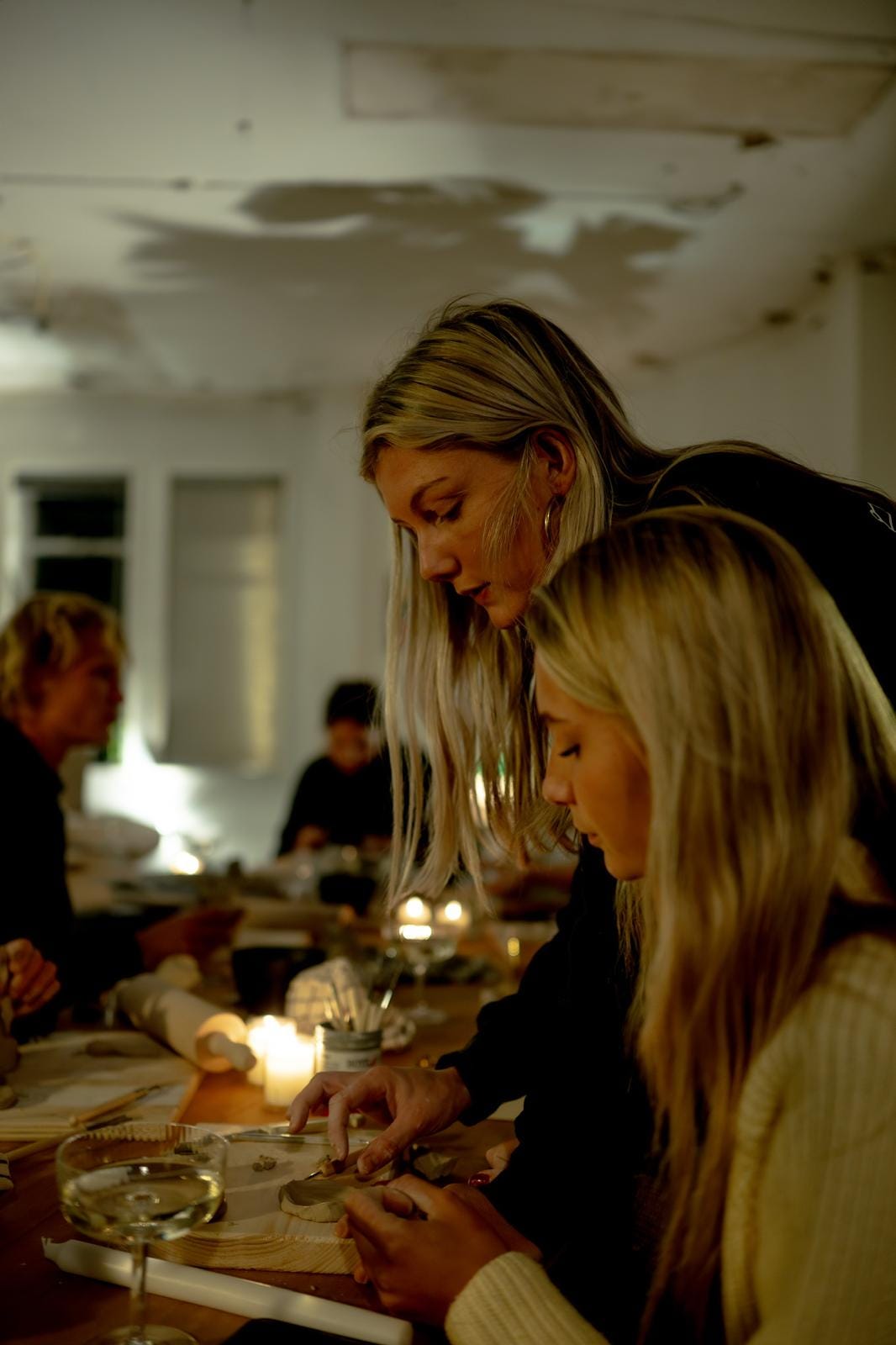
Your studio is in a national monument from 1925. How does working in a building with nearly a century of history influence the objects you create?
(Ahh… our studio <3) I think this question builds on our previous answer in terms of the influence an honest and approachable space has for creating a safe work environment. Not only for the people we host, but also for us.
Though the building is incredibly beautiful, the space really invites and encourages imperfection as it has been stripped on the interior for future renovations. Because of this, our studio really reflects the character of clay; Being raw yet delicate, appearing monumental yet fragile and being intriguing because of its imperfections and layers of history. Being in an environment like this reminds us to what it means to work with a material like clay. And it reminds us that things can be both beautiful and messy.
Clay is such a grounding, tactile medium. How has working with your hands changed the way you perceive the objects in your own home?
Michelle: I’ve generally gotten a greater respect for any building, object or thing since my studies at the Royal Academy of Arts. Working in all these different workshops and learning about materials and production processes really helps you to get a better idea of the existence of an object. This creates a deeper connection with the objects I surround myself with and also makes me want to have less things. Most of the things you’ll find in my home are second-hand, passed down, or made by myself or by friends. It’s these objects with a story that are most dear to me.
Amy: I often find myself looking at the objects in my home and asking: how could I make this myself? Clay is an incredibly versatile material — you can create almost anything with it. Gradually, I have been replacing more and more items in my home with pieces I’ve made myself. While clay is often associated primarily with tableware, its possibilities extend far beyond that. Working closely and consistently with the material naturally generates new ideas; the hands-on process continually opens up new ways of thinking and making.
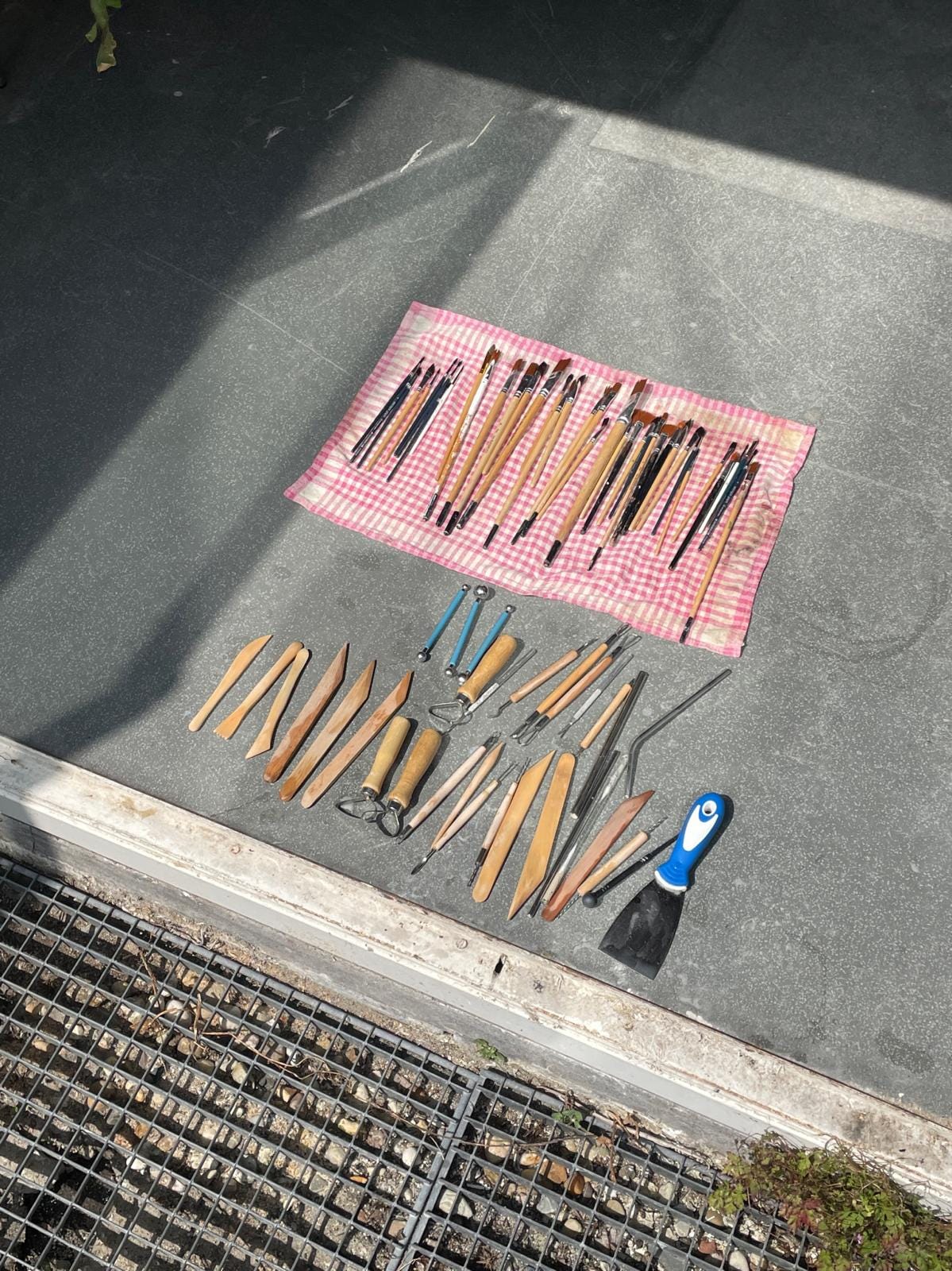
Ceramics is a slow, multi-stage conversation between the maker and the material, is there a specific stage of that process where you feel most connected to the piece?
Michelle: For me it’s probably the moment right after screwing something up and then figuring out and understanding what went wrong or wasn’t working for the material. The moment of disconnection, where the material does something unexpected. That’s the moment it draws me in the most. It’s really a conversation like you say, and it’s the moment when you’re speaking the same language and are learning something that I feel most connected.
Amy: The first stage of the process involves working directly with the clay itself. At this point, the material is fully malleable and seems to hold endless possibilities. You can shape it into any form and continuously adjust it. The clay does not yet feel fragile. As it begins to dry, however, the risk of cracking increases, and you lose some of that control, naturally creating a greater sense of distance between yourself and the piece.
What is coming up next for Het Keramisch Huis?
Aside from this very exciting collaboration, we’ve been working on designing a new website! The website will have an updated version of our booking system and focus more on hosting ceramics workshop events. It will also include a webshop (ahh!) where we will finally start selling our handmade pieces.
What is your current favourite design object?
Michelle: I don’t know if you can call it a ‘design object’, but I’ve been seeing a lot of these household blankets with beautiful grids and patterns as I’m currently travelling through Morocco.
Amy: The lamp: Splügen Bräu pendant lamp, designed by Achille and Pier Giacomo Castiglioni in 1961, which hangs above my dining table.
Thank you to Amy and Michelle for letting us peek inside the playful, tactile world of Het Keramisch Huis.
Catch their work at The Art of Sitting exhibition on Friday, 13th March, or join a glazing workshop on Saturday, 14th March. Tickets available now.
Stay Cozy,
Denise